
Public Health
One Connected Record for
Every Person, Across Every Public Health Program Your Agency Runs
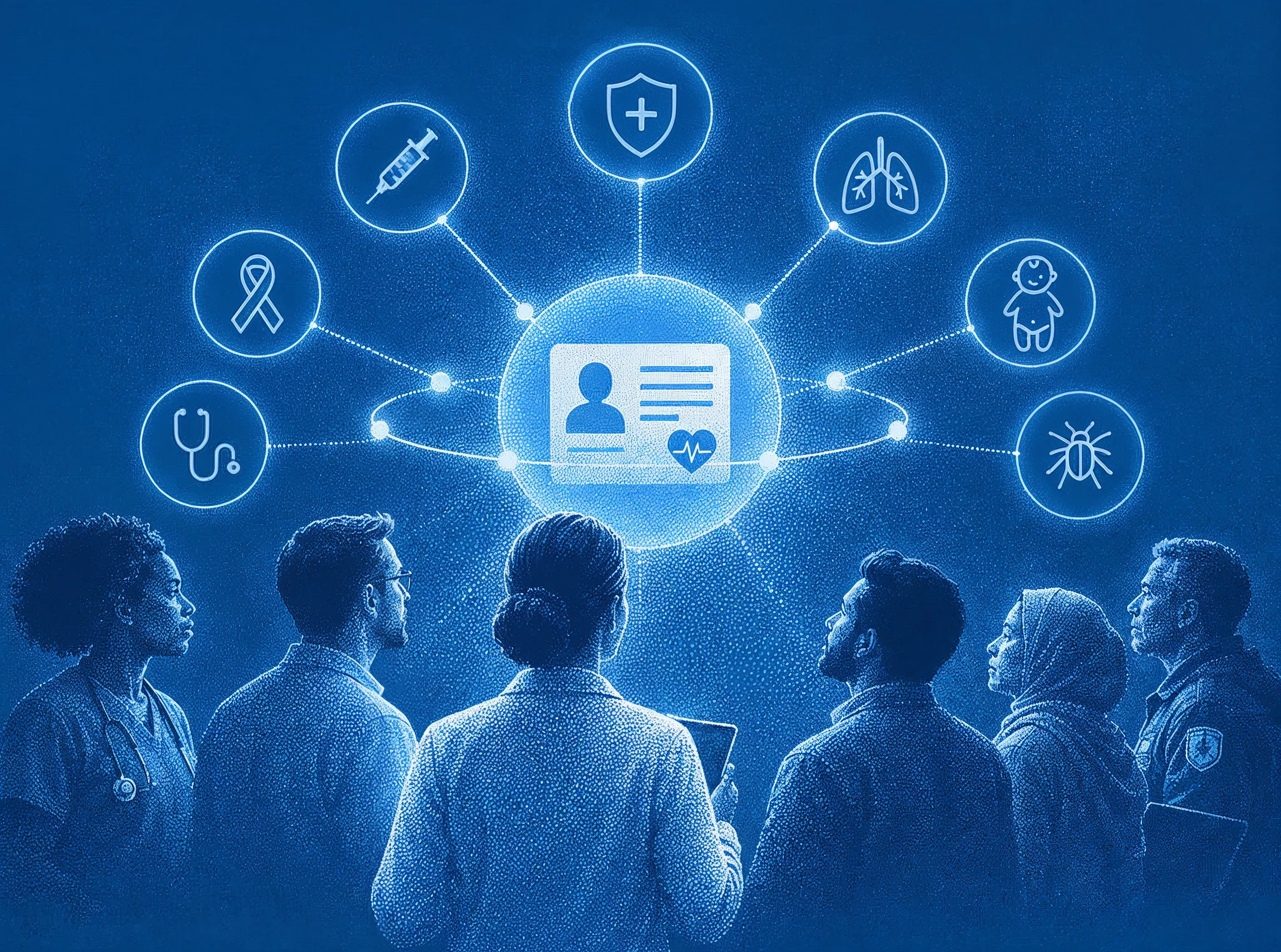
Amorphic Public Health 360 brings clinical feeds, lab results, case reports, surveillance, immunization, and vital records into one governed foundation. Your teams get a view across programs, better data inside each one, and automation for the work still done by hand.
Challenges We Solve
Public health programs describe the same four problems. All four trace to systems that were never designed to be read together.

Every Program Holds a Piece of the Person
Immunization, surveillance, behavioral health, and vital records each run in their own system. No single system holds what happened to one person over time.

Case Reports Still Arrive by Paper and Fax
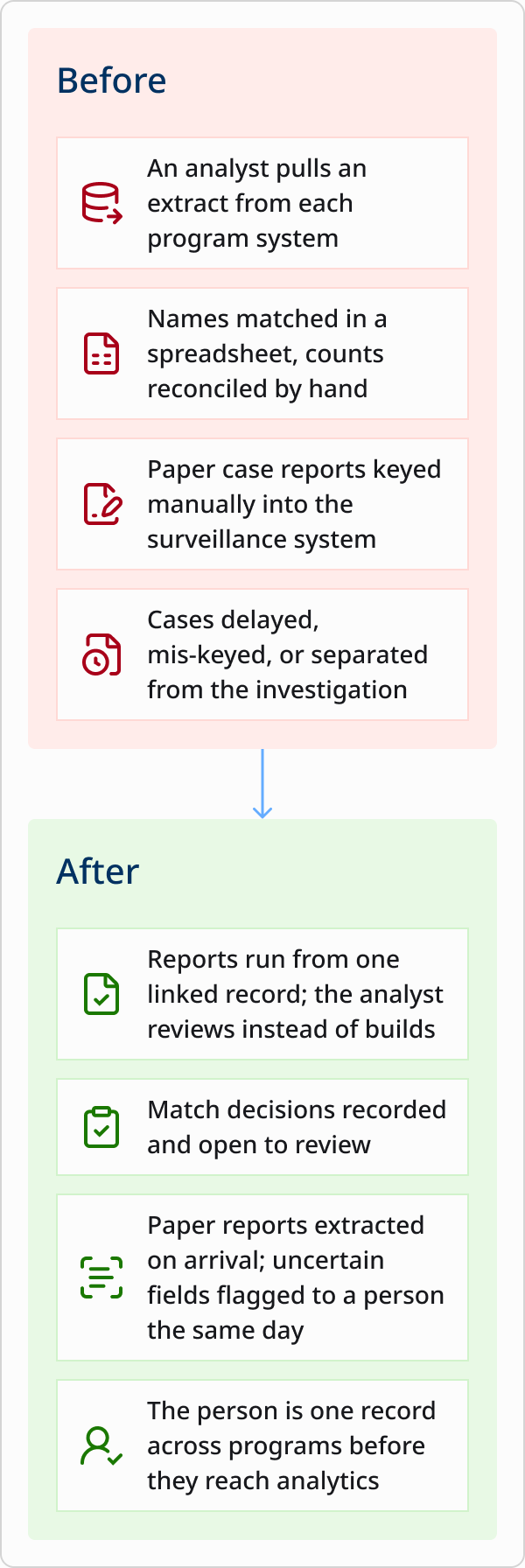
Someone keys each report into the surveillance system by hand. That is where cases get delayed, mis-keyed, and separated from the investigation that needs them.

The Data Arrives Incomplete and Inconsistent
Lab results and case reports come in with missing fields and local codes that differ by provider. Program staff clean the same problems by hand before anyone trusts a count.

Reports Are Assembled by Hand
An analyst pulls an extract from each program system, matches names in a spreadsheet, and reconciles the counts that disagree. Then does it again for the next report.
What Public Health 360 Does
Public Health 360 is Cloudwick’s data foundation with public health features, built for state and local health departments and health information exchanges. It does not impose a Cloudwick data model on your programs. Your registries, surveillance systems, and case management tools keep running. The platform reads from them; our implementation team configures it for your data.

See One Person Across Programs
Records from immunization, surveillance, and every connected program are matched to the same person. Uncertain matches route to your staff for review, not to an automated decision.

Better Data Inside Each Program
Lab results, case reports, and hospital data are checked at ingestion. Each provider’s local codes are translated to standard terms before records reach a report.

Take In the Feeds You Already Receive
Providers keep sending data the way they send it today. Clinical records are converted to FHIR for partners that need them, and the platform is TEFCA ready.

Automate the Work Done by Hand
The platform reads paper and fax case reports and routes uncertain fields to a person for review. Analysts work from one linked record, not from extracts matched in a spreadsheet.

Controlled Access Across Programs
Personal and health information is flagged at registration, steward-reviewed, and enforced by role. Behavioral health and 42 CFR Part 2 records are held in separate access-controlled segments from the start.
What Changes
The analyst stops building the report and starts reviewing it.
Use Cases on This Foundation
Once the foundation is in place, each program and application your agency adds draws on the same governed data.

Outbreak and Overdose Early Warning
Surveillance, hospital visit, and lab data together let epidemiologists look for a rise across all sources at once. An overdose view brings hospital visits and mortality data into one place.

Maternal and Child Cohort Tracking
Vital records, immunization, and program data matched to the same child let the agency follow a cohort from birth through immunization.
Care-Gap Alerts to Providers
Queries on the linked record surface missed immunizations or follow-ups that never happened, so programs can alert the provider who can close the gap.

Federal Reporting from Linked Data
Reports to CDC, SAMHSA, and HRSA run from the linked record instead of from extracts matched by hand.
Your agency keeps its own report specifications and submission.
Where It Runs Today


For Your Role

For Health Directors and Executives
- Real-time visibility into public health trends across programs
- Cross-program analysis linking interventions to population outcomes
- Automated reports for faster, data-driven policy decisions
- One view of each person across every program your agency runs

For Chief Data Officers
- Governed datasets with catalog, lineage, and quality monitoring built in
- Classifications proposed at registration, steward-reviewed, and auto-enforced
- Fine-grained access control enforced at the row and column level
- Every dataset access, pipeline run, and policy event logged and queryable

For IT Leaders
- Deploys in your own AWS account; your agency holds data, keys, and the access boundary
- Technical controls that support HIPAA; 42 CFR Part 2 handled as a layered permissioning regime
- Available via AWS Marketplace and NASPO ValuePoint
- Existing systems keep running; nothing is replaced

For Analysts and Epidemiologists
- One linked record across programs, not extracts matched by hand
- Query across immunization, surveillance, behavioral health, and vital records from one governed catalog
- Paper and fax reports extracted automatically; uncertain fields flagged for your review
- Plain-language queries answered from governed data, with citations to the source
Why Cloudwick

Deploy in Your Own AWS Account.
Your agency owns the data, the keys, and every access control. Health data does not leave your environment.

Three Operating Models to Fit Where Your Team Is.
Cloudwick operates the platform on your behalf, runs alongside your team while capacity builds, or hands the platform to your team to manage.

Code Translation Done with Your Staff.
Translating each provider’s local codes to standard terms is usually the largest part of bringing a feed onto the foundation. We do it alongside the people in your agency who know what the data means.

Nothing Already Running Gets Replaced.
Existing registries, surveillance systems, and case management tools stay where they are.
